Magento Open Source is a store platform: catalogue, prices, cart, customer account and orders. It is the same application as Adobe Commerce, without the paid Adobe licence and without some B2B modules. It is not “PHP on ordinary hosting”. It needs PHP, a database, cache, search, cron and indexes.
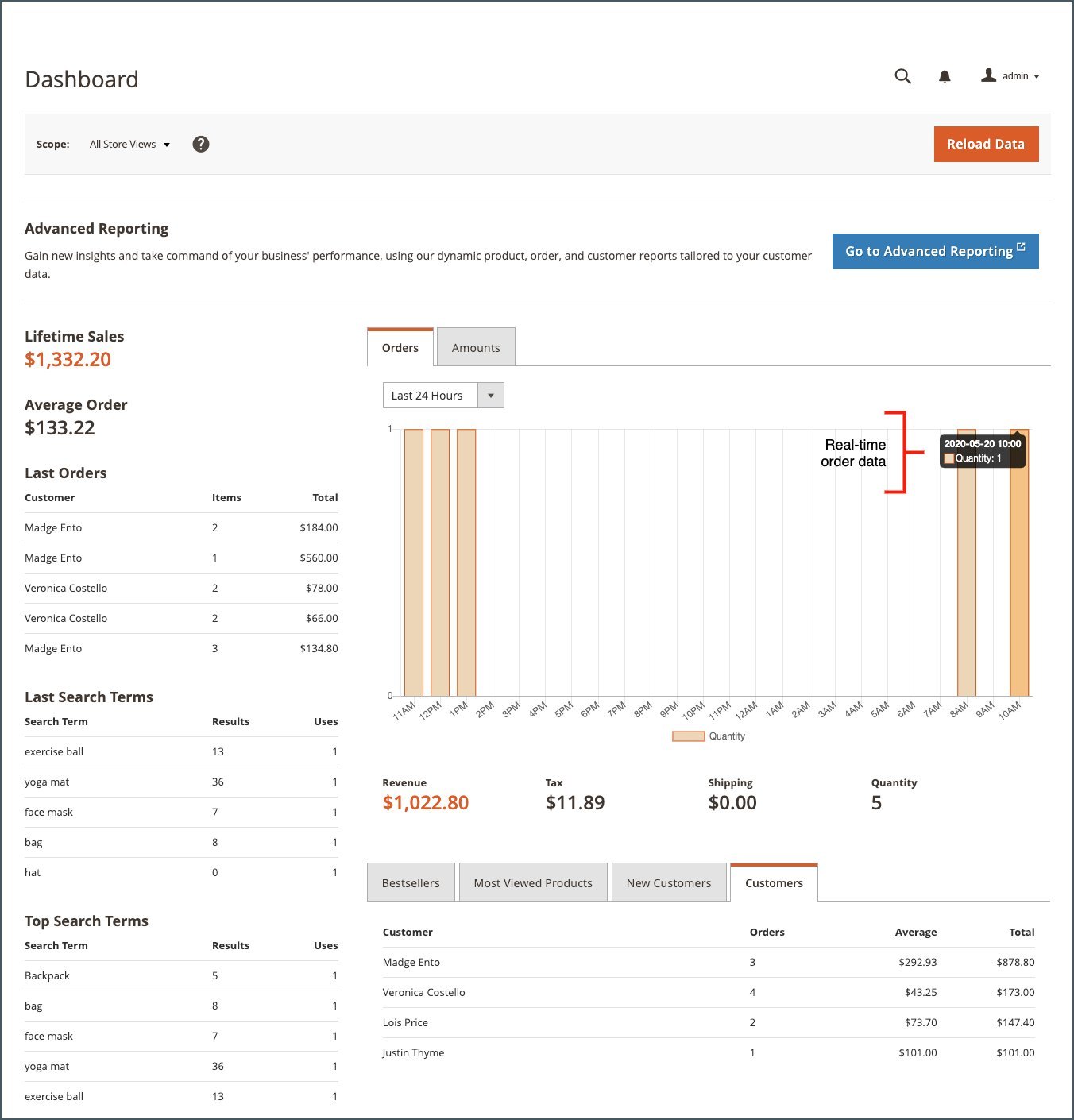
The admin panel shows sales. Day-to-day operations live in configuration, scheduled jobs and the queue.
When this platform makes sense
You use Magento Open Source when catalogue and checkout should be this platform and a Commerce licence is out of budget. Listings and filters should come from indexes and page cache, not from a live database query on every visit.
Redis holds session and cache. OpenSearch holds search. The queue handles mail, exports and indexing. Photos are better off the store server, on a CDN. Varnish sits in front of PHP and serves ready catalogue pages.
How to put it together
Line 2.4 wants PHP 8.2 or 8.3, MariaDB, Redis, OpenSearch, nginx and Composer. In configuration, cache and session go to Redis, indexing runs in the background, search sits on an internal host.
The application user’s cron should run every minute. Queue processes should not sit in the same pool as checkout. In the panel you turn on full page cache with Varnish, two-factor login on admin, and an admin path other than /admin. Staging has the same shape of configuration, with a masked database.
Before a peak you check that indexes are current, cache is on and cron is not lagging. You test the cart, not the homepage. Stack care: ecommerce.
In short: Magento stands up when it has a database, cache, search and background jobs. PHP on shared hosting will not carry it once the catalogue and checkout start working in earnest.